


New York weather is tricky in May. The colors of spring are in full array as shown by this beautiful tree just outside the front door of our Mission Office. The next moment we are caught in a hailstorm so powerful that we have to pull off to the side of the road and find shelter. A few minutes latter, at the end of the storm, a magnificent rainbow appears. One day it is hot the next it is freezing. The landscape is beautiful and lush now that the leaves are on the trees. We have almost forgotten what New York looked like in the winter.
Now that the weather is better, we are venturing out to see this beautiful mission area. Elder Barlow needed to install some T-wii units in the mission cars this month. A T-wii is an electronic device which monitors the driving of our missionaries. It warns them if they are going over the speed limit, have aggressive driving, use of the car after hours (10pm) or leave the mission area. A report is given to Elder Barlow and President Wirthlin for review. If they appear on the report consistently, they may have their driving privileges taken away. The studies have shown this keeps our missionaries safe.
 We traveled over to Albany Zone and met the Sisters at a farm, While Elder Barlow installed their T-wii, we enjoyed a delicious breakfast. After, Elder and Sister Barlow traveled to Albany to see some sites. Our first stop was at the center of the State's capital. In the heart of downtown is a beautiful complex which includes the State Capital Building (which looks like a castle), offices and the New York State Museum. We were excited to learn that the Museum housed a wonderful display of the Mohawk Indian Tribe, one of the six tribes of the Iroquois federation. This is the place and the tribe of which Sister Barlow has a special connection.
 We love that we were sent on a mission right where our ancestors lived. On Granny Andrew's side we have a line that is shrouded in family folk lore and mystery. Sylvanus Hulet, who was from Connecticut and then Massachusetts, was a soldier in both the French & Indian War and two campaigns in the Revolutionary War, one against Burgoyne in 1777 and another against Arnold, who burned his home town in South Connecticut in 1780. After the war the Hulet family returned to Massachusetts. Sylvanus mustered out of the colonial army in New York. He married Mary Lewis who is believed to be from Albany, New York. Mary Lewis was five years younger than Sylvanus and the search for her origins has plagued generations of Hulet Family genealogists. Mary Lewis was one-quarter Indian. The name of her grandmother was remembered in the family as Running Deer. That's all that is known. Assuming that Mary was from the Albany area, we learned from our trip to the Capital that this is Mohawk territory. There are hints in the names of her children and grandchildren (Lewis, Francis, Schyler-- all New York Colonial names) that hers was a New York family and her Indian relations may very well have been Mohawk of the Iroquois Confederacy.
We also know that Sally Hullet, daughter of Mary Lewis and Sylvester Hulet, visited with her Mohawk Indian relatives about 1814 in New York, north and west of Albany along the Mohawk River.
We love that we were sent on a mission right where our ancestors lived. On Granny Andrew's side we have a line that is shrouded in family folk lore and mystery. Sylvanus Hulet, who was from Connecticut and then Massachusetts, was a soldier in both the French & Indian War and two campaigns in the Revolutionary War, one against Burgoyne in 1777 and another against Arnold, who burned his home town in South Connecticut in 1780. After the war the Hulet family returned to Massachusetts. Sylvanus mustered out of the colonial army in New York. He married Mary Lewis who is believed to be from Albany, New York. Mary Lewis was five years younger than Sylvanus and the search for her origins has plagued generations of Hulet Family genealogists. Mary Lewis was one-quarter Indian. The name of her grandmother was remembered in the family as Running Deer. That's all that is known. Assuming that Mary was from the Albany area, we learned from our trip to the Capital that this is Mohawk territory. There are hints in the names of her children and grandchildren (Lewis, Francis, Schyler-- all New York Colonial names) that hers was a New York family and her Indian relations may very well have been Mohawk of the Iroquois Confederacy.
We also know that Sally Hullet, daughter of Mary Lewis and Sylvester Hulet, visited with her Mohawk Indian relatives about 1814 in New York, north and west of Albany along the Mohawk River.


Philip Schuyler was a major-general in the American Revolution, a United States senator and a delegate to the second Continental Congress. He had a mansion in the heart of Albany. We were able to visit that mansion. Here, Benjamin Franklin visited, George Washington dined, and British General John Burgoyne stayed as a prisoner of war. Schuyler would have lived here when Mary and her family were in the area. It is interesting that Schuyler or Shyler was a family name.
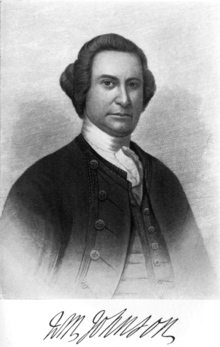
Another interesting figure we learned about, who lived earlier, along the Mohawk River near Albany was Sir William Johnson, 1st Baronet. He was an Anglo-Irish official of the British Empier. As a young man, Johnson moved to the Province of New York. He would have lived at the time of our Running Deer who was three years his junior. Johnson became closely associated with the Mohawk and learned their language. The Mohawks saw in Johnson someone who could advocate their interests in the British imperial system. Sometime around 1742 (about the time Mary's mother was born), they adopted him as an honorary sachem, or civil chief. He was named Warraghiyagey, which translated is "A Man who undertakes great Things". In his lifetime, Johnson gained a reputation as a man who had numberous children with European and Native American women (are you my grandaddy?). At the time, men were not ostracized for having illegitimate children, as long as they could afford it and supported them. So we see that our Mohawk and the British, whom the Mohawk aligned themselves during the early years, interacte with each other. Their main interaction was the fur trade.

As we followed the highway back along the Mohawk River to our home, we couldn't help think what it must have been like for our ancestors who lived here. We decided to get out and take this picture. Sister Barlow approached the river's edge only to begin slipping on the moss covered shore. Elder Barlow grabbed her before she slipped into the river. He said, "Your not much of an Indian, are you."

 Because of Memorial Day weekend, there was a very realistic reenactment of the events at Ft Stanwix. This is how we were greeted at the entrance and then were taken to the General's quarters to be questioned as to our intentions. These are Scottish colonial soldiers who were some of the earliest inhabitants of the fort which was built by the British. Fort Stanwix was abandoned in 1768 and allowed to go into ruin. The fort was reoccupied by Colonial troops on July 12, 1776. They began reconstruction and renamed it Fort Schuyler, although many continued to call it Fort Stanwix. After it was no longer being used it once again fell into disrepair and the City of Rome grew up on the site. Many years later, a fire destroyed an entire block where the fort stood and between 1974 and 1978 the fort was reconstructed. Here are some additional picutures:


We actually had a couple of slow weeks so you can see that we took advantage of the time. We are once again as busy as ever. Elder Barlow just set up nine more apartments and received another eight new cars. We had Return and Report and Zone Leader Council last week and are gearing up for twenty one new missionaries to enter the field next week. As busy as we are, we feel that our Father in Heaven is giving us the strength and health to carry out our responsibilities. We love our mission, our missionaries and President and Sister Wirthlin. We are having the time of our lives. We pray for each of you every day. We pray for your families and for your happiness. Until next month.....


